The world is a vampire, sent to drain
Secret destroyers, hold you up to the flames
And what do I get, for my pain?
Betrayed desires, and a piece of the game
Even though I know - I suppose I'll show
All my cool and cold - like old job
Despite all my rage I am still just a rat in a cage
Despite all my rage I am still just a rat in a cage
Then someone will say what is lost can never be saved
Despite all my rage I am still just a rat in a cage
Now I'm naked, nothing but an animal
But can you fake it, for just one more show?
And what do you want?
I want to change
And what have you got, when you feel the same?
Even though I know - I suppose I'll show
All my cool and cold - like old job
Despite all my rage I am still just a rat in a cage
Despite all my rage I am still just a rat in a cage
Then someone will say what is lost can never be saved
Despite all my rage I am still just a rat in a cage
Tell me I'm the only one
Tell me there's no other one
Jesus was the only son, yeah.
Tell me I'm the chosen one
Jesus was the only son for you
Despite all my rage I am still just a rat in a cage
Despite all my rage I am still just a rat in a cage
And someone will say what is lost can never be saved
Despite all my rage I am still just a rat in a cage
Despite all my rage am I still just a rat in a-
Despite all my rage am I still just a rat in a-
Despite all my rage am I still just a rat in a cage
Tell me I'm the only one
Tell me there's no other one
Jesus was the only son for you
And I still believe that I cannot be saved
And I still believe that I cannot be saved
And I still believe that I cannot be saved
And I still believe that I cannot be saved
***********
Ok, everyone, don't panic.
I'm not suicidal or depressed.
I am merely EXHAUSTED.
And for some reason, the mental image of a hamster on a wheel translated itself to this song, which fit my mood surprisingly aptly.
I feel like I haven't stopped for weeks now, and I need a break, I need refreshment, I need to be alone for a bit.
I don't want hugs, or cookies, or prayers, or anything other than some peace and quiet and solitude.
So I'm a freak, shoot me.
I am taking a break.
A very short break.
After which I shall return, with my usual pithy commentary (ha).
Maybe a few days, no more than a week.
I need to rest.
And maybe eat some ice cream.
Saturday, March 31, 2007


Friday, March 30, 2007
“You can't teach people to be lazy - either they have it, or they don't.” - Dagwood Bumstead
By way of Blackbird.
****************
10 FAVORITES
Favorite Color: green
Favorite Food: gorgonzola, eggs, garlic-stuffed green olives
Favorite Month: February
Favorite Song: right this minute?
This
Laugh all you want, but it’s catchy as hell
Favorite Movie: Moonstruck
Favorite Sport: swimming
Favorite Season: summer
Favorite Day of the week: Thursday
Favorite Ice Cream Flavor: mint chocolate chip
Favorite Time of Day: late night
9 CURRENTS
Current Mood: fed up
Current Taste: Colgate toothpaste
Current Clothes: brown-striped pajama bottoms, grey long-sleeved t-shirt
Current Desktop: Primo and Seg in hockey gear
Current Toenail Color: au naturel
Current Time: 7:54 a.m.
Current Surroundings: bedroom, rumpled bed, cat on feet
Current Thoughts: I need a vacation
8 FIRSTS
First Best Friend: Nicole
First Kiss: 16, at Clementon Amusement Park. His name was David.
First Screen Name: si_moo
First Pet: Samantha the miserable cat
First Piercing: ears
First Crush: My sixth-grade science teacher?
First CD: Ella Fitzgerald Sings the Gershwin Songbook
7 LASTS
Last Cigarette: a couple months ago
Last Drink: a Hoegaarden, last night
Last Car Ride: a ride home from the Sharp Edge last night
Last Kiss: Terzo’s slobbery good morning kiss
Last Movie Seen: I have no idea; am planning to watch Bridget Jones’ Diary tomorrow evening while H is at some stupid bachelor party
Last Phone Call: last night on the reference desk
Last CD Played: Ralph’s World
6 HAVE YOU EVERS
Have You Ever Dated One Of Your Best Guy/Girl Friends: yep
Have You Ever Broken the Law: yep
Have You Ever Been Arrested: yep
Have You Ever Skinny Dipped: yep
Have You Ever Been on TV: nope
Have You Ever Kissed Someone You Didn’t Know: yep
5 THINGS
Thing You’re Wearing: glasses
Thing You’ve Done Today: hard-boiled half a dozen eggs for Seg’s school Easter project
Thing You Can Hear Right Now: Terzo wailing because he can’t go outside yet
Thing You Can’t Live Without: books
Thing You Do When You’re Bored: read
4 PLACES YOU’VE BEEN TODAY
bed
bathroom
kitchen
basement
3 PEOPLE YOU CAN TELL ANYTHING TO
Gina
Dr L
my therapist
2 CHOICES
Black or White: black
Hot or Cold: hot
1 THING YOU WANT TO DO BEFORE YOU DIE
See my children grown up and out of the house
****************
10 FAVORITES
Favorite Color: green
Favorite Food: gorgonzola, eggs, garlic-stuffed green olives
Favorite Month: February
Favorite Song: right this minute?
This
Laugh all you want, but it’s catchy as hell
Favorite Movie: Moonstruck
Favorite Sport: swimming
Favorite Season: summer
Favorite Day of the week: Thursday
Favorite Ice Cream Flavor: mint chocolate chip
Favorite Time of Day: late night
9 CURRENTS
Current Mood: fed up
Current Taste: Colgate toothpaste
Current Clothes: brown-striped pajama bottoms, grey long-sleeved t-shirt
Current Desktop: Primo and Seg in hockey gear
Current Toenail Color: au naturel
Current Time: 7:54 a.m.
Current Surroundings: bedroom, rumpled bed, cat on feet
Current Thoughts: I need a vacation
8 FIRSTS
First Best Friend: Nicole
First Kiss: 16, at Clementon Amusement Park. His name was David.
First Screen Name: si_moo
First Pet: Samantha the miserable cat
First Piercing: ears
First Crush: My sixth-grade science teacher?
First CD: Ella Fitzgerald Sings the Gershwin Songbook
7 LASTS
Last Cigarette: a couple months ago
Last Drink: a Hoegaarden, last night
Last Car Ride: a ride home from the Sharp Edge last night
Last Kiss: Terzo’s slobbery good morning kiss
Last Movie Seen: I have no idea; am planning to watch Bridget Jones’ Diary tomorrow evening while H is at some stupid bachelor party
Last Phone Call: last night on the reference desk
Last CD Played: Ralph’s World
6 HAVE YOU EVERS
Have You Ever Dated One Of Your Best Guy/Girl Friends: yep
Have You Ever Broken the Law: yep
Have You Ever Been Arrested: yep
Have You Ever Skinny Dipped: yep
Have You Ever Been on TV: nope
Have You Ever Kissed Someone You Didn’t Know: yep
5 THINGS
Thing You’re Wearing: glasses
Thing You’ve Done Today: hard-boiled half a dozen eggs for Seg’s school Easter project
Thing You Can Hear Right Now: Terzo wailing because he can’t go outside yet
Thing You Can’t Live Without: books
Thing You Do When You’re Bored: read
4 PLACES YOU’VE BEEN TODAY
bed
bathroom
kitchen
basement
3 PEOPLE YOU CAN TELL ANYTHING TO
Gina
Dr L
my therapist
2 CHOICES
Black or White: black
Hot or Cold: hot
1 THING YOU WANT TO DO BEFORE YOU DIE
See my children grown up and out of the house
Wednesday, March 28, 2007
"...it's like having a P in Scrabble and no way to use it." - paraphrased from Robert Asprin
Suse gave me P for my Scrabble post.
Thank you, Suse!
*
P is for:
Pea Soup!
*

Primo and the Junior Penguins Yellow Team.
He finished his season Saturday and came home with a Pens away jersey, and a Marty Straka bobblehead (ok, I know he’s not a Penguin anymore) and a trophy, which promptly fell off its pedestal.
Primo came downstairs with the two pieces in his hands, crying. I told him we could fix it and started rooting around in the junk drawer for the Crazy Glue.
And then he told me his trophy breaking was almost as sad as if I had died.
*
Popco by Scarlett Thomas is, despite the author’s unfortunate name, one of the most interesting and fresh contemporary books I have read in a long time. Besides, it’s about, in part, cryptology, and I like cryptology. Codes and code-breaking fascinate me, even though my math background is nominal at best. If you read PopCo and like it, I can say you will probably also like Simon Singh’s comprehensive and totally accessible (non-fiction) The Code Book. Other fun, smart fiction dealing with puzzles includes Ellen Raskin’s children’s book The Westing Game, Graeme Base’s visual riddle The Eleventh Hour, and Tom Stoppard’s brilliant, erudite play, Arcadia.
Neal Stephenson’s Cryptonomicon has been on my to-read list for so long it’s embarrassing.
At one point in my younger, more ambitious reading life, I slogged through much of Douglas Hofstedter’s classic Godel, Escher, Bach and am now glad I did, though it was tough going at the time.
I poked around on Thomas’s website for a while this morning and fell even deeper in love with her when I read that she adored David Mitchell and read his number9dream interspersed with bouts of learning to play Radiohead’s “Karma Police” on her guitar.
*
Porch railings. When we bought our house, there were, attached to the porch columns, the original wooden turned-spindle porch railings. I took them off when I rebuilt the porch columns and never got around to putting them back on as honestly, they needed serious work, or perhaps a total rebuild. I am at the point where I am exploring alternatives – brand new vinyl replicas, new handrails with the original spindles, iron railings...what-have-you. But I NEED porch railings since The Baby delights in toddling around the edge of the porch, teetering on the brink of disaster every time we go outside, and my heart just can’t take the stress anymore.
*
Pajamas. I wish I could live in my pajamas. I sleep in ratty old t-shirts and cotton pajama bottoms (Old Navy men’s L or XL, usually, and I prefer light-colored striped patterns). I love how comfy they are, how easy they are to clean, and how oddly sexy I feel in them. It’s easy to imagine you are a sylph when your excess weight is completely covered. Somewhat along those lines, I have often said before that I could be very happy dressing in what most Americans consider Muslim or Orthodox clothing – long-sleeved loose shirts, long loose skirts, and a headscarf. I have never, even when I was very thin, been comfortable displaying large amounts of skin, or with wearing form-fitting clothing. I have lately taken to looking for my skirts on one of these websites, because I can’t seem to find anything worth spending the money on, that I could actually wear on my body in public, at typical retail stores. (I hope this isn’t offensive to anyone who is a practicing Muslim or Jewish woman; I truly see it more as appreciation for the ways in which you choose to reveal or cover your bodies, and not just put it all out there on a plate for anyone to goggle. I don’t mean to offend anyone, I hope I don’t.)
*
Package. I got a package today in the mail. I LOVE getting packages in the mail. Granted, this package contained Seg’s birthday present trains, but I am expecting a book any day now, and even a boring package is a good package.
*
Pumpkin and Punto. Punto, il cane, gets a scoop or two of pumpkin on top of his dry food at his evening meal. Apparently it's very good for dogs' digestive systems. I am just trying to prolong the time till I have to have his anal glands drained.
*
Present and Party. I am preparing for Seg's birthday party, wrapping his presents and planning his cake.
*
P words I just like:
Pandora
pepper
percolate
perpetrate
phylum
plankton
psyllium
putz
Thank you, Suse!
*
P is for:
Pea Soup!
*

Primo and the Junior Penguins Yellow Team.
He finished his season Saturday and came home with a Pens away jersey, and a Marty Straka bobblehead (ok, I know he’s not a Penguin anymore) and a trophy, which promptly fell off its pedestal.
Primo came downstairs with the two pieces in his hands, crying. I told him we could fix it and started rooting around in the junk drawer for the Crazy Glue.
And then he told me his trophy breaking was almost as sad as if I had died.
*
Popco by Scarlett Thomas is, despite the author’s unfortunate name, one of the most interesting and fresh contemporary books I have read in a long time. Besides, it’s about, in part, cryptology, and I like cryptology. Codes and code-breaking fascinate me, even though my math background is nominal at best. If you read PopCo and like it, I can say you will probably also like Simon Singh’s comprehensive and totally accessible (non-fiction) The Code Book. Other fun, smart fiction dealing with puzzles includes Ellen Raskin’s children’s book The Westing Game, Graeme Base’s visual riddle The Eleventh Hour, and Tom Stoppard’s brilliant, erudite play, Arcadia.
Neal Stephenson’s Cryptonomicon has been on my to-read list for so long it’s embarrassing.
At one point in my younger, more ambitious reading life, I slogged through much of Douglas Hofstedter’s classic Godel, Escher, Bach and am now glad I did, though it was tough going at the time.
I poked around on Thomas’s website for a while this morning and fell even deeper in love with her when I read that she adored David Mitchell and read his number9dream interspersed with bouts of learning to play Radiohead’s “Karma Police” on her guitar.
*
Porch railings. When we bought our house, there were, attached to the porch columns, the original wooden turned-spindle porch railings. I took them off when I rebuilt the porch columns and never got around to putting them back on as honestly, they needed serious work, or perhaps a total rebuild. I am at the point where I am exploring alternatives – brand new vinyl replicas, new handrails with the original spindles, iron railings...what-have-you. But I NEED porch railings since The Baby delights in toddling around the edge of the porch, teetering on the brink of disaster every time we go outside, and my heart just can’t take the stress anymore.
*
Pajamas. I wish I could live in my pajamas. I sleep in ratty old t-shirts and cotton pajama bottoms (Old Navy men’s L or XL, usually, and I prefer light-colored striped patterns). I love how comfy they are, how easy they are to clean, and how oddly sexy I feel in them. It’s easy to imagine you are a sylph when your excess weight is completely covered. Somewhat along those lines, I have often said before that I could be very happy dressing in what most Americans consider Muslim or Orthodox clothing – long-sleeved loose shirts, long loose skirts, and a headscarf. I have never, even when I was very thin, been comfortable displaying large amounts of skin, or with wearing form-fitting clothing. I have lately taken to looking for my skirts on one of these websites, because I can’t seem to find anything worth spending the money on, that I could actually wear on my body in public, at typical retail stores. (I hope this isn’t offensive to anyone who is a practicing Muslim or Jewish woman; I truly see it more as appreciation for the ways in which you choose to reveal or cover your bodies, and not just put it all out there on a plate for anyone to goggle. I don’t mean to offend anyone, I hope I don’t.)
*
Package. I got a package today in the mail. I LOVE getting packages in the mail. Granted, this package contained Seg’s birthday present trains, but I am expecting a book any day now, and even a boring package is a good package.
*
Pumpkin and Punto. Punto, il cane, gets a scoop or two of pumpkin on top of his dry food at his evening meal. Apparently it's very good for dogs' digestive systems. I am just trying to prolong the time till I have to have his anal glands drained.
*
Present and Party. I am preparing for Seg's birthday party, wrapping his presents and planning his cake.
*
P words I just like:
Pandora
pepper
percolate
perpetrate
phylum
plankton
psyllium
putz
Monday, March 26, 2007
"I want my string beans to be quarantined!" - Patrick Zevo, "Toys"
I am currently immersed in the strange, other world of Scarlett Thomas's PopCo.
I keep thinking, "Wow, I don't really *love* this, and I so do not get Alice Butler, and I don't know where it's going..." and yet I still have to keep reading.
When I finish it, I will fill you in, but for right now, I am busy reading.
Which reminds me, the other book I am reading is Maureen Corrigan's Leave Me Alone, I'm Reading.
That's all.
Update at eleven.
Or tomorrow, or something.
I keep thinking, "Wow, I don't really *love* this, and I so do not get Alice Butler, and I don't know where it's going..." and yet I still have to keep reading.
When I finish it, I will fill you in, but for right now, I am busy reading.
Which reminds me, the other book I am reading is Maureen Corrigan's Leave Me Alone, I'm Reading.
That's all.
Update at eleven.
Or tomorrow, or something.
Sunday, March 25, 2007
“It's better to have loved and lost than to have to do forty pounds of laundry a week.” - Dr Laurence Peter
I have been flat out with a bit of a stomach bug complicated by one of the worst migraines I have had in months. Spent all of today either sleeping or wishing for death, when I wasn’t vomiting.
I’d arranged to have today off – a free Saturday! Unheard of! – so I could go catch Primo’s double-header hockey game (last games of the season) and then be available to run him to this afternoon science project class I signed him up for a few months ago, held at a local university (that just happens to my alma mater). H and I had symphony tix for tonight – Sibelius’ Fifth, which I was totally psyched for. Plus, I was looking forward to fitting in there somewhere a nice long romp up to the park with Punto il Cane (yes, the dog is staying).
Instead, the boys and H went to hockey and out to brunch, and H took Primo to his class, and then H went to the symphony and came home to walk Punto – all while I slept and tried to keep down some kind of headache medication.
I have had migraines almost all my life, and the typical pattern is that I have several big events to get through, lots of stress to cope with, and I power through whatever needs to be done and then when I finally have some downtime, my brain goes haywire and I wind up with a migraine – vomiting, chills, noise and light sensitivity, the works. Today my brain felt like it was bleeding.
H and I both agree that my brain hates me.
Now I am awake and wired (caffeine and migraine meds) and, even though I am feeling much better, am not quite up to reading or even watching TV – my concentration is shot, and the faint light from my laptop is just barely tolerable.
So I offer you these random musings:
Paula has redone her laundry room. It’s pretty and bright and so cute; she certainly has a knack.
My immediate thoughts, though: 1) As I said in the comments, don’t ever visit my laundry room, where I scoop detergent and pull dryer sheets straight from their boxes. 2) Where, oh, where do you sort your dirty clothes? Am I the only slacker that pulls the laundry out of the chute and then builds piles of dirty clothes, sorted by color, on the basement floor? And then hauls the clean stuff upstairs where it sits, precariously towering on the family room sofa, until I sort it, fold it, and put it away?
**************
I am really liking Blackbird’s new shower. Those lilttle teeny floor tiles are so charming.
My first thought was how much easier it would be to clean without all the nooks and crannies provided by shower doors (I do like the idea of a teak mat, though, but buy two, dear, so you don’t have to slide the one around. (You asked.))
My second thought was how lovely that bit of greenish wall looks next to the linen-colored tile; the combo is right out of House and Garden (however, Blackbird points out, they are painting the wall a different color. I think I am sad about that, although the present loveliness could just be a result of Bbird’s mad photo skillz).
Of course, my bathroom tile is about fifty years old AND Pepto-Bismol pink, so it could be that anything other than that would entice me.
**************
Segundo’s fourth birthday is fast approaching. I have all his presents:
a Marc-Andre Fleury Penguins t-shirt (he wanted Brooks Orpik (For that matter, so do I. Yum.) but we couldn’t find one)
a giant Thomas the Tank Engine coloring book and a Cars coloring book (Seg is very into coloring these days, and his fine motor skills are progressing wildly)
and because clearly we do not have nearly enough Thomas trains, Stepney and the museum cars, specifically asked for because of the Thomas-saurus book I brought home from the Famous Rebecca O’Connell’s book signing at Borders last week.
I had to buy something as I had a 10%-off coupon benefiting Primo’s school, and Rebecca sold out of her book Penina Levine is a Hard-Boiled Egg before we got there.
I bought Rebecca’s The Baby Goes Beep for Terzo, and a Matt Christopher hockey book for Primo. I do intend to go back and buy Penina Levine - you should too, even though it is solely Rebecca’s fault that I will be spending tomorrow afternoon at Chuck E Cheese.
*************
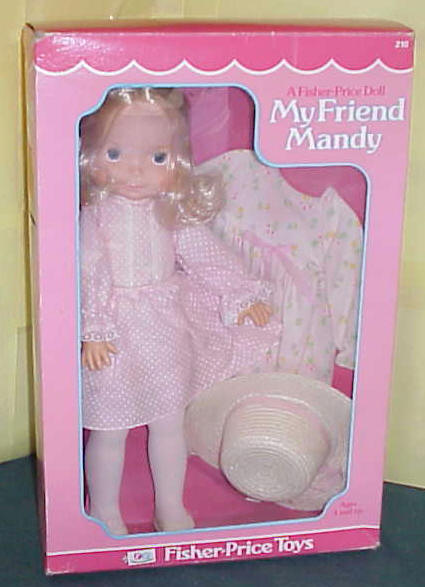
Seg asked for this beauty. There was a feature recently in the local paper about these dolls, and I caught him practically hyperventilating over the pretty blonde doll “with hair like mine, Mama!” Sixty-five bucks is a bit steep, and sadly I don’t think his grandparents will ante up for a doll, but I know I have this cutie around from when I was little, AND I think I still have all her clothes and I KNOW she still has all her hair, unlike poor Mimi, so I think I will unpack her and wash and iron her clothes and give her to him.
**************
For those of you who wondered: I skipped the mini-reunion of ex-boyfriends et al. I was going to anyway, but the migraine made the decision for me.
Although if Michael Madigan doesn't deserve to be vomited on, I don't know who does.
************
Upcoming posts, a fluid list:
Librarians in fiction
Arctic fiction (inspired by The White Darkness)
More bus reading
My Scrabble post – Suse gave me P.
Recent book purchases, and a couple quickie reviews
***********
And last but not least: I am starving. Not a whole lot appeals though, right at the moment. But how can it be that I don’t have any frozen coconut cake in the house? Who does the goddamn grocery shopping around here?
I’d arranged to have today off – a free Saturday! Unheard of! – so I could go catch Primo’s double-header hockey game (last games of the season) and then be available to run him to this afternoon science project class I signed him up for a few months ago, held at a local university (that just happens to my alma mater). H and I had symphony tix for tonight – Sibelius’ Fifth, which I was totally psyched for. Plus, I was looking forward to fitting in there somewhere a nice long romp up to the park with Punto il Cane (yes, the dog is staying).
Instead, the boys and H went to hockey and out to brunch, and H took Primo to his class, and then H went to the symphony and came home to walk Punto – all while I slept and tried to keep down some kind of headache medication.
I have had migraines almost all my life, and the typical pattern is that I have several big events to get through, lots of stress to cope with, and I power through whatever needs to be done and then when I finally have some downtime, my brain goes haywire and I wind up with a migraine – vomiting, chills, noise and light sensitivity, the works. Today my brain felt like it was bleeding.
H and I both agree that my brain hates me.
Now I am awake and wired (caffeine and migraine meds) and, even though I am feeling much better, am not quite up to reading or even watching TV – my concentration is shot, and the faint light from my laptop is just barely tolerable.
So I offer you these random musings:
Paula has redone her laundry room. It’s pretty and bright and so cute; she certainly has a knack.
My immediate thoughts, though: 1) As I said in the comments, don’t ever visit my laundry room, where I scoop detergent and pull dryer sheets straight from their boxes. 2) Where, oh, where do you sort your dirty clothes? Am I the only slacker that pulls the laundry out of the chute and then builds piles of dirty clothes, sorted by color, on the basement floor? And then hauls the clean stuff upstairs where it sits, precariously towering on the family room sofa, until I sort it, fold it, and put it away?
**************
I am really liking Blackbird’s new shower. Those lilttle teeny floor tiles are so charming.
My first thought was how much easier it would be to clean without all the nooks and crannies provided by shower doors (I do like the idea of a teak mat, though, but buy two, dear, so you don’t have to slide the one around. (You asked.))
My second thought was how lovely that bit of greenish wall looks next to the linen-colored tile; the combo is right out of House and Garden (however, Blackbird points out, they are painting the wall a different color. I think I am sad about that, although the present loveliness could just be a result of Bbird’s mad photo skillz).
Of course, my bathroom tile is about fifty years old AND Pepto-Bismol pink, so it could be that anything other than that would entice me.
**************
Segundo’s fourth birthday is fast approaching. I have all his presents:
a Marc-Andre Fleury Penguins t-shirt (he wanted Brooks Orpik (For that matter, so do I. Yum.) but we couldn’t find one)
a giant Thomas the Tank Engine coloring book and a Cars coloring book (Seg is very into coloring these days, and his fine motor skills are progressing wildly)
and because clearly we do not have nearly enough Thomas trains, Stepney and the museum cars, specifically asked for because of the Thomas-saurus book I brought home from the Famous Rebecca O’Connell’s book signing at Borders last week.
I had to buy something as I had a 10%-off coupon benefiting Primo’s school, and Rebecca sold out of her book Penina Levine is a Hard-Boiled Egg before we got there.
I bought Rebecca’s The Baby Goes Beep for Terzo, and a Matt Christopher hockey book for Primo. I do intend to go back and buy Penina Levine - you should too, even though it is solely Rebecca’s fault that I will be spending tomorrow afternoon at Chuck E Cheese.
*************
Seg asked for this beauty. There was a feature recently in the local paper about these dolls, and I caught him practically hyperventilating over the pretty blonde doll “with hair like mine, Mama!” Sixty-five bucks is a bit steep, and sadly I don’t think his grandparents will ante up for a doll, but I know I have this cutie around from when I was little, AND I think I still have all her clothes and I KNOW she still has all her hair, unlike poor Mimi, so I think I will unpack her and wash and iron her clothes and give her to him.
**************
For those of you who wondered: I skipped the mini-reunion of ex-boyfriends et al. I was going to anyway, but the migraine made the decision for me.
Although if Michael Madigan doesn't deserve to be vomited on, I don't know who does.
************
Upcoming posts, a fluid list:
Librarians in fiction
Arctic fiction (inspired by The White Darkness)
More bus reading
My Scrabble post – Suse gave me P.
Recent book purchases, and a couple quickie reviews
***********
And last but not least: I am starving. Not a whole lot appeals though, right at the moment. But how can it be that I don’t have any frozen coconut cake in the house? Who does the goddamn grocery shopping around here?
Wednesday, March 21, 2007
"Is she rabid?" - Peter Dickinson, "Troll"
Swiped from Rogue Librarian, and Katya, who took it from Hilda by way of Dixie.
Hardback or trade paperback or mass market paperback?
If I am buying used, it doesn’t really matter, but all other things being equal, I prefer trade paperback. Easier to read and carry. And they feel RIGHT in the hand.
Amazon or brick and mortar?
I have never met a bookstore that I did not like.
Barnes & Noble or Borders?
Barnes and Noble. Mostly because Borders’ pretensions to folksy, homey bookstores annoy the crap out of me; I don’t want someone to have sat in a chair with a latte and read thru my book before I finally pull it off the shelf and buy it.
I like my bookstores stodgier and more formal – more intellectual. I know, I am a freak. Borders stores are the blonde, busty, perky cheerleaders of the literary world; B&N is the cute but geeky brainiac hiding behind her wire-rims in chem class.
Bookmark or dogear?
Usually prefer bookmarks but I dog-ear too.
Alphabetize by author or alphabetize by title or random?
Alphabetize by author. And catalogued by LOC.
Keep, throw away, or sell?
I NEVER throw away books (with the one-time notable exception of Tom Wolfe’s Man in Full which was such an execrable piece of tripe that I couldn’t bear to have been the instrument for anyone else reading it.) I weeded my collection when we moved three years ago and have regretted it ever since.
Keep dust jacket or toss it?
Keep it – although I learned my lesson and take them off if I am lending a book. (Not that I do that anymore either, unless it’s to Gina.)
Read with dust jacket or remove it?
I generally take it off, so if the book gets beat up while I am reading it – which it does because I read while I am cooking, and on the bus, and in the bath, etc. - I can slip the jacket back on and make it pristine again
Short story or novel?
Novel. Usually the only kind of short stories I really like are the kind that an author crafts into an intertwined tale, like Andrea Barrett’s Ship Fever.
Collection (short stories by same author) or anthology (short stories by different authors)?
Collections, if at all.
Harry Potter or Lemony Snicket?
Harry Potter. Like Katya, I have tried the Lemony Snicket books a few times. I just can’t get into them at all. And once they made movies out of them, with Jim Carrey? Forget it.
Stop reading when tired or at chapter breaks?
When I can no longer keep my eyes open one more second.
“It was a dark and stormy night” or “Once upon a time”?
Both.
Buy or Borrow?
I don’t mind borrowing from the library at all, but borrowing from other people puts too much pressure on me.
New or used?
Don’t much care, usually. Although buying used makes me feel all environmentally conscious AND thrifty. Ha!
Buying choice: book reviews, recommendation or browse?
Yes.
Tidy ending or cliffhanger?
It doesn’t matter – or rather, it depends on the book. But sometimes I am in the mood for one or the other, in which case, I choose the author carefully.
Morning reading, afternoon reading or nighttime reading?
I breathe, I eat, I read. And I do all three all day and night long.
Stand-alone or series?
I like series well enough, but each book within should be able to stand alone.
Favorite series?
Neil Gaiman’s Sandman books. Laurie R. King’s Mary Russell books. Jennifer Chiaverini’s Elm Creek Quilts books. And the Maisie Dobbs books are growing on me.
Favorite children's book?
Roller Skates by Ruth Sawyer
Favorite book of which nobody else has heard?
This is a toughie. I can’t say The Sparrow, as I have done my level best to trumpet to the world how great this book is; ditto with Stones from the River; besides, they are both fairly popular. I am going to pick an author – Robertson Davies. Which is crazy since he’s huge, but most people I have recommended him to had no idea who he was or what he’d written. I reread his books regularly.
Favorite books read last year?
The Sandman books, Brief History of the Dead, The Sparrow, Broken for You
Favorite books of all time?
Roller Skates, Satanic Verses, Stones from the River, The Sparrow, Pride and Prejudice, Possession, The Cunning Man, Daughter of Time, not in any particular order
Least favorite book you finished last year?
I have only recently (within the past few years) come to grips with the guilt I felt for not finishing a book. Life is too short. So if I don’t like a book, I put it down and don’t finish it. That said, I got bogged down halfway through The Alienist and slogged through to the end anyway. There was just enough there to make me want to keep reading, although I was ultimately disappointed.
What was the last book you finished?
The Trolls by Polly Horvath
What are you reading right now?
The Nazi Officer’s Wife, Stones for Ibarra.
What are you reading next?
The Lost, Our Only May Amelia, and Julie of the Wolves which it turns out I missed when I was a kid.
Hardback or trade paperback or mass market paperback?
If I am buying used, it doesn’t really matter, but all other things being equal, I prefer trade paperback. Easier to read and carry. And they feel RIGHT in the hand.
Amazon or brick and mortar?
I have never met a bookstore that I did not like.
Barnes & Noble or Borders?
Barnes and Noble. Mostly because Borders’ pretensions to folksy, homey bookstores annoy the crap out of me; I don’t want someone to have sat in a chair with a latte and read thru my book before I finally pull it off the shelf and buy it.
I like my bookstores stodgier and more formal – more intellectual. I know, I am a freak. Borders stores are the blonde, busty, perky cheerleaders of the literary world; B&N is the cute but geeky brainiac hiding behind her wire-rims in chem class.
Bookmark or dogear?
Usually prefer bookmarks but I dog-ear too.
Alphabetize by author or alphabetize by title or random?
Alphabetize by author. And catalogued by LOC.
Keep, throw away, or sell?
I NEVER throw away books (with the one-time notable exception of Tom Wolfe’s Man in Full which was such an execrable piece of tripe that I couldn’t bear to have been the instrument for anyone else reading it.) I weeded my collection when we moved three years ago and have regretted it ever since.
Keep dust jacket or toss it?
Keep it – although I learned my lesson and take them off if I am lending a book. (Not that I do that anymore either, unless it’s to Gina.)
Read with dust jacket or remove it?
I generally take it off, so if the book gets beat up while I am reading it – which it does because I read while I am cooking, and on the bus, and in the bath, etc. - I can slip the jacket back on and make it pristine again
Short story or novel?
Novel. Usually the only kind of short stories I really like are the kind that an author crafts into an intertwined tale, like Andrea Barrett’s Ship Fever.
Collection (short stories by same author) or anthology (short stories by different authors)?
Collections, if at all.
Harry Potter or Lemony Snicket?
Harry Potter. Like Katya, I have tried the Lemony Snicket books a few times. I just can’t get into them at all. And once they made movies out of them, with Jim Carrey? Forget it.
Stop reading when tired or at chapter breaks?
When I can no longer keep my eyes open one more second.
“It was a dark and stormy night” or “Once upon a time”?
Both.
Buy or Borrow?
I don’t mind borrowing from the library at all, but borrowing from other people puts too much pressure on me.
New or used?
Don’t much care, usually. Although buying used makes me feel all environmentally conscious AND thrifty. Ha!
Buying choice: book reviews, recommendation or browse?
Yes.
Tidy ending or cliffhanger?
It doesn’t matter – or rather, it depends on the book. But sometimes I am in the mood for one or the other, in which case, I choose the author carefully.
Morning reading, afternoon reading or nighttime reading?
I breathe, I eat, I read. And I do all three all day and night long.
Stand-alone or series?
I like series well enough, but each book within should be able to stand alone.
Favorite series?
Neil Gaiman’s Sandman books. Laurie R. King’s Mary Russell books. Jennifer Chiaverini’s Elm Creek Quilts books. And the Maisie Dobbs books are growing on me.
Favorite children's book?
Roller Skates by Ruth Sawyer
Favorite book of which nobody else has heard?
This is a toughie. I can’t say The Sparrow, as I have done my level best to trumpet to the world how great this book is; ditto with Stones from the River; besides, they are both fairly popular. I am going to pick an author – Robertson Davies. Which is crazy since he’s huge, but most people I have recommended him to had no idea who he was or what he’d written. I reread his books regularly.
Favorite books read last year?
The Sandman books, Brief History of the Dead, The Sparrow, Broken for You
Favorite books of all time?
Roller Skates, Satanic Verses, Stones from the River, The Sparrow, Pride and Prejudice, Possession, The Cunning Man, Daughter of Time, not in any particular order
Least favorite book you finished last year?
I have only recently (within the past few years) come to grips with the guilt I felt for not finishing a book. Life is too short. So if I don’t like a book, I put it down and don’t finish it. That said, I got bogged down halfway through The Alienist and slogged through to the end anyway. There was just enough there to make me want to keep reading, although I was ultimately disappointed.
What was the last book you finished?
The Trolls by Polly Horvath
What are you reading right now?
The Nazi Officer’s Wife, Stones for Ibarra.
What are you reading next?
The Lost, Our Only May Amelia, and Julie of the Wolves which it turns out I missed when I was a kid.
so excited
Khaled Hosseini (The Kite Runner) has a new book coming out!
A Thousand Splendid Suns will be released on May 22.
Cannot. Wait.
I will look forward to this more than I will look forward to my birthday.
A Thousand Splendid Suns will be released on May 22.
Cannot. Wait.
I will look forward to this more than I will look forward to my birthday.
Tuesday, March 20, 2007
"I am just going outside and may be some time." - Lawrence "Titus" Oates
The Girl with the Tangerine Scarf.
Fascinating stuff.
Accessible, readable, intelligent, fun in an educational-but-not-dull sort of way.
Thought-provoking.
Go.
Read.
Trust me.
Would I lead you astray?
And for those of you with the YA jones:
The White Darkness.
Symone is a majorly kick-butt teenage girl.
How many fourteen-year-olds do YOU know who fall in love with dead Antarctic explorers and thwart a madman who believes that the earth is hollow?
Not many, I’ll bet.
(This book made me contemplate my small-to-medium-sized collection of Arctic/Antarctic literature and decide I really really need to do some thrift store shopping soon. It also made me drag out my copy of With Scott to the Pole and fall in love with Titus Oates my own self.)
Fascinating stuff.
Accessible, readable, intelligent, fun in an educational-but-not-dull sort of way.
Thought-provoking.
Go.
Read.
Trust me.
Would I lead you astray?
And for those of you with the YA jones:
The White Darkness.
Symone is a majorly kick-butt teenage girl.
How many fourteen-year-olds do YOU know who fall in love with dead Antarctic explorers and thwart a madman who believes that the earth is hollow?
Not many, I’ll bet.
(This book made me contemplate my small-to-medium-sized collection of Arctic/Antarctic literature and decide I really really need to do some thrift store shopping soon. It also made me drag out my copy of With Scott to the Pole and fall in love with Titus Oates my own self.)
Monday, March 19, 2007
"It's evil. It's diabolical. It's lemon-scented. This Plan Z can't possibly fail!" - Plankton, "The SpongeBob SquarePants Movie"
The Guardian has the results of a survey of British readers: Books you own but have never finished.
Topping the list: Vernon God Little
I own this book.
And I have never read it.
I am in good company: 35% of the survey’s 4000 respondents had bought it and never finished it.
It won the 2003 Booker, beating out worthy contenders like Brick Lane (ok, I didn’t like that one either and never finished it) and Oryx and Crake (all right, admittedly one of Atwood’s weakest). Nonetheless, it did win the Booker, generally a fairly decent guideline of reading material.
I have started it a number of times; I have never finished it.
I was irrationally irritated by the author’s use of “fucken” instead of “fucking” or even “fuckin.’”
For that matter, I still am irrationally irritated by the author, and his heroin-addict/wastrel-turned-brilliant-novelist pose, and his conceit of using DBC (standing for “Dirty But Clean”) without initials. (I SAID I was being irrational.)
Seems I am not the only one.
Harry Potter and the Goblet of Fire
Really?
I liked this one.
The fifth was deadly, the sixth practically unreadable, and while I will struggle through (and buy) the seventh, I am not anticipating enjoying it.
Ulysses
I HAVE read this.
As previously noted, I had to read it for a class, and write a rather involved paper on it, but mostly, I enjoyed it well enough, in parts. I loved the Molly Bloom bits, and skimmed the stuff I didn’t love.
I would not want to read it again.
Captain Correlli’s Mandolin
I read this one, too, on vacation down the shore two summers ago.
I was alternating it with The Sparrow, which was so intense that I occasionally need to take a breather, and I filled the breather with de Bernieres. It was ok. Not wonderful, but ok.
Cloud Atlas
What?! Are people smoking crack? Are they braindead? This book is brilliant and wonderful. Humph. Well, if they don’t finish it, it’s their loss.
As for Wild Swans - I can’t tell you how many times I have checked this book out of the library. And returned it unread YET AGAIN.
"Fifty-five per cent of those polled for the survey…said they buy books for decoration, and have no intention of actually reading them. Rachel Cugnoni, from the publisher Vintage, said the apparent unpopularity of tough literary …suggests readers are purchasing "intellectual credibility for the bookshelf.”
Oh-kay. That’s just pathetic.
And this man has his head up his ass, as Eats, Shoots, and Leaves was pretentious and annoying: ”…the publisher behind Eats, Shoots & Leaves, Lynn Truss's UK bestseller, blamed the readers for the text appearing fourth on the list. "These people must have the intelligence of plankton not to be able to get through 204 pages of a comic, readable book," said Andrew Franklin…”
I will bet HE hasn’t read it. I tried, and could not see what all the fuss was about; if you want to get cute with grammar, I much prefer The Transitive Vampire.
I was chatting with the Rogue Librarian just this morning, about Katya’s book meme, and we were talking about our least-favorite books that we have finished. And I realized how hard that question was for me, because one thing I have succeeded in doing within the past few years is allowing myself, with relatively little guilt, to not finish a book I hate.
Thank God, or I’d still be slogging my way through The Emperor’s Children and both the wonderful Girl in the Tangerine Scarf and the exciting White Darkness would still be unread, sitting forlornly on top of the teetering pile by my bed.
And that would be very wrong.
Topping the list: Vernon God Little
I own this book.
And I have never read it.
I am in good company: 35% of the survey’s 4000 respondents had bought it and never finished it.
It won the 2003 Booker, beating out worthy contenders like Brick Lane (ok, I didn’t like that one either and never finished it) and Oryx and Crake (all right, admittedly one of Atwood’s weakest). Nonetheless, it did win the Booker, generally a fairly decent guideline of reading material.
I have started it a number of times; I have never finished it.
I was irrationally irritated by the author’s use of “fucken” instead of “fucking” or even “fuckin.’”
For that matter, I still am irrationally irritated by the author, and his heroin-addict/wastrel-turned-brilliant-novelist pose, and his conceit of using DBC (standing for “Dirty But Clean”) without initials. (I SAID I was being irrational.)
Seems I am not the only one.
Harry Potter and the Goblet of Fire
Really?
I liked this one.
The fifth was deadly, the sixth practically unreadable, and while I will struggle through (and buy) the seventh, I am not anticipating enjoying it.
Ulysses
I HAVE read this.
As previously noted, I had to read it for a class, and write a rather involved paper on it, but mostly, I enjoyed it well enough, in parts. I loved the Molly Bloom bits, and skimmed the stuff I didn’t love.
I would not want to read it again.
Captain Correlli’s Mandolin
I read this one, too, on vacation down the shore two summers ago.
I was alternating it with The Sparrow, which was so intense that I occasionally need to take a breather, and I filled the breather with de Bernieres. It was ok. Not wonderful, but ok.
Cloud Atlas
What?! Are people smoking crack? Are they braindead? This book is brilliant and wonderful. Humph. Well, if they don’t finish it, it’s their loss.
As for Wild Swans - I can’t tell you how many times I have checked this book out of the library. And returned it unread YET AGAIN.
"Fifty-five per cent of those polled for the survey…said they buy books for decoration, and have no intention of actually reading them. Rachel Cugnoni, from the publisher Vintage, said the apparent unpopularity of tough literary …suggests readers are purchasing "intellectual credibility for the bookshelf.”
Oh-kay. That’s just pathetic.
And this man has his head up his ass, as Eats, Shoots, and Leaves was pretentious and annoying: ”…the publisher behind Eats, Shoots & Leaves, Lynn Truss's UK bestseller, blamed the readers for the text appearing fourth on the list. "These people must have the intelligence of plankton not to be able to get through 204 pages of a comic, readable book," said Andrew Franklin…”
I will bet HE hasn’t read it. I tried, and could not see what all the fuss was about; if you want to get cute with grammar, I much prefer The Transitive Vampire.
I was chatting with the Rogue Librarian just this morning, about Katya’s book meme, and we were talking about our least-favorite books that we have finished. And I realized how hard that question was for me, because one thing I have succeeded in doing within the past few years is allowing myself, with relatively little guilt, to not finish a book I hate.
Thank God, or I’d still be slogging my way through The Emperor’s Children and both the wonderful Girl in the Tangerine Scarf and the exciting White Darkness would still be unread, sitting forlornly on top of the teetering pile by my bed.
And that would be very wrong.
Saturday, March 17, 2007
"The snotgreen sea. The scrotumtightening sea." - Buck Mulligan, in Ulysses by James Joyce
I join 50 Books’ Doppleganger’s List of Books I Have Lied About Reading, already in progress.
I have actually read the one book most people seem to need to lie about: Ulysses.
Also, Satanic Verses.
I LOVED Verses. I had to read it for a class, but wound up falling in love and reading it again a year or two later. On an international flight, before the events of September 11, 2001. Not sure it would be the wisest airplane book now.
I had to read Ulysses for a class as well, and write a rather involved paper on it. Mostly, I enjoyed it well enough, in parts. I loved the Molly Bloom bits, and skimmed the stuff I didn’t love.
I would not want to read it again.
I lied about having read Lolita before I read it and loved it.
I lied about reading tons of plays (I was a drama major in undergrad):
Major Barbara
Death of a Salesman
Desire Under the Elms
Endgame
Emperor Jones
Peer Gynt
More Shakespeare than you can shake a stick at, most of which I read later and enjoyed.
Turns out that designing a set for a play you haven't read really isn't all that difficult.
I do lie to my next-door-neighbor-from-when-I-was-a-kid, Peggy, who was one of my mom’s closest friends. She sends me boxes of books, occasionally winners like the Penny Vincenzis, but more often dreck akin to, if not actually, Danielle Steele. But I call her and thank her and tell her how much I enjoyed them. Because she means well, and she’s eighty years old, people!
Plus, I spent years of my childhood lying to her that I HADN’T read a book her daughter had lent me and which I HAD read but then subsequently lent to my friend Janine, who lost it - or so she claimed – and I was terrified to tell Peggy. So I kept telling her – over two or three years – that I hadn’t read it yet. Damn Baby Island. I used to pray fervently every night that Janine would find that damn book and give it back to me.
So I figure pretending I have read the Danielle Steele-wannabes is some sort of karmic something or other (but, do note, not enough to make me actually read them.)
But mostly I either don’t lie, or I have read whatever book in question. (That sounds unbearably snotty, but it's true. I think it's because I am thrilled to pieces to talk about a book I HAVE read, so...what's the point in trying to talk about a book I haven't?)
Also, really, what else do I have to do with my time?
I have actually read the one book most people seem to need to lie about: Ulysses.
Also, Satanic Verses.
I LOVED Verses. I had to read it for a class, but wound up falling in love and reading it again a year or two later. On an international flight, before the events of September 11, 2001. Not sure it would be the wisest airplane book now.
I had to read Ulysses for a class as well, and write a rather involved paper on it. Mostly, I enjoyed it well enough, in parts. I loved the Molly Bloom bits, and skimmed the stuff I didn’t love.
I would not want to read it again.
I lied about having read Lolita before I read it and loved it.
I lied about reading tons of plays (I was a drama major in undergrad):
Major Barbara
Death of a Salesman
Desire Under the Elms
Endgame
Emperor Jones
Peer Gynt
More Shakespeare than you can shake a stick at, most of which I read later and enjoyed.
Turns out that designing a set for a play you haven't read really isn't all that difficult.
I do lie to my next-door-neighbor-from-when-I-was-a-kid, Peggy, who was one of my mom’s closest friends. She sends me boxes of books, occasionally winners like the Penny Vincenzis, but more often dreck akin to, if not actually, Danielle Steele. But I call her and thank her and tell her how much I enjoyed them. Because she means well, and she’s eighty years old, people!
Plus, I spent years of my childhood lying to her that I HADN’T read a book her daughter had lent me and which I HAD read but then subsequently lent to my friend Janine, who lost it - or so she claimed – and I was terrified to tell Peggy. So I kept telling her – over two or three years – that I hadn’t read it yet. Damn Baby Island. I used to pray fervently every night that Janine would find that damn book and give it back to me.
So I figure pretending I have read the Danielle Steele-wannabes is some sort of karmic something or other (but, do note, not enough to make me actually read them.)
But mostly I either don’t lie, or I have read whatever book in question. (That sounds unbearably snotty, but it's true. I think it's because I am thrilled to pieces to talk about a book I HAVE read, so...what's the point in trying to talk about a book I haven't?)
Also, really, what else do I have to do with my time?
Friday, March 16, 2007
"Women and cats will do as they please and men and dogs should relax and get used to the idea." - Robert Heinlein
What I am reading:
The Girl in the Tangerine Scarf
What I am watching:
Raines, with Jeff Goldblum.
Not sure they can sustain it but the pilot was riveting.
What I am eating:
Not much. My ears hurt, and my throat is sore, so I feel like I have been subsisting on hot tea. Maybe a banana or some Thin Mints occasionally.
What I am cooking:
Gallons of Guinness beef stew, loaves of soda bread, and a chocolate sheet cake with fudge frosting; chicken with potatoes and peas in coconut milk curry for dinner tonight.
Who I am missing:
Gina.
My lunch hour on Tuesdays has been shifted later, and now I can't even have lunch with her once a week.
What I am writing:
A rewrite of a work proposal, lots of emails, and not much blogwise. Sorry.
What I am doing:
Angsting terribly over the dog.
I am just not sure I am cut out for dog ownership, and I am feeling terribly guilty.
We are giving it a few days – he’s a lovely dog, I just may not be a dog person after all.
Dogs are so damn NEEDY. I knew it, I guess I just didn't KNOW it.
Go on, tell me I am rotten. I can take it.
Off to sort laundry, bake cake and soda bread, vaccuum, straighten, and scrub bathrooms.
Also, feel very guilty.
The Girl in the Tangerine Scarf
What I am watching:
Raines, with Jeff Goldblum.
Not sure they can sustain it but the pilot was riveting.
What I am eating:
Not much. My ears hurt, and my throat is sore, so I feel like I have been subsisting on hot tea. Maybe a banana or some Thin Mints occasionally.
What I am cooking:
Gallons of Guinness beef stew, loaves of soda bread, and a chocolate sheet cake with fudge frosting; chicken with potatoes and peas in coconut milk curry for dinner tonight.
Who I am missing:
Gina.
My lunch hour on Tuesdays has been shifted later, and now I can't even have lunch with her once a week.
What I am writing:
A rewrite of a work proposal, lots of emails, and not much blogwise. Sorry.
What I am doing:
Angsting terribly over the dog.
I am just not sure I am cut out for dog ownership, and I am feeling terribly guilty.
We are giving it a few days – he’s a lovely dog, I just may not be a dog person after all.
Dogs are so damn NEEDY. I knew it, I guess I just didn't KNOW it.
Go on, tell me I am rotten. I can take it.
Off to sort laundry, bake cake and soda bread, vaccuum, straighten, and scrub bathrooms.
Also, feel very guilty.
Wednesday, March 14, 2007
"May the road rise up to meet you. May the wind be always at your back..." - Traditional Irish blessing
The giant Babe family Saint Patrick’s Day party is almost upon us.
H’s aunt hosts the shindig in her tiny little Cape Cod. It’s usually wall-to-wall people, and if it’s warm enough – and even if it’s not, frankly – people hang on the front and back porches, and linger on the sidewalk in front of the house. EVERYONE wears green, or shamrocks, or a t-shirt with some cutesy “Kiss Me, I’m Irish” sort of sentiment. (I wore orange for years, but no one ever got the joke.)
The kids are banished to the basement, or the backyard if it’s nice out, where they run amok, and only emerge to stuff their faces, or until the live music starts. A boombox plays canned Irish music but later in the evening, the oldsters croon “DannyBoy” and “Four Green Fields,” or H takes his guitar in hand, obligingly playing everything from tear-jerking Irish classics, to Springsteen and Husker Du, to Wiggles and Raffi tunes for the kids.
Sometime during the night we all line up and gamely stumble our way through a few hands of a reel, or energetically mangle a Keel Row or the Siege of Ennis. H’s sister and cousin learned step and ceili dancing years ago as children; I met H at a ceili dance; and our young cousin-once-removed is a competitive step dancer who will do a hornpipe and some hard-shoe dancing for us, in the itsy-bitsy space cleared for her in the living room.
The liquid offerings run the gamut, from IC Light to Guinness, complemented by a complete selection of hard liquor and soft drinks. The food is an even more dizzying array of convenience, traditional, and experimental cooking. There is always the compulsory ham, and plenty of cabbage and potatoes. There are always shamrock-shaped Eat-n-Park cookies. There is always soda bread, often several different types (everyone is devoted to their own recipe). You can always count on H’s younger cousins to bring slightly more healthful if avant-garde (for the Irish) things like strawberry-gorgonzola salad, or spinach-and-red-pepper pasta. Otherwise, you bring what you want, and it almost all gets eaten eventually, except for the year that a just-legal-age far-flung relation drank too much, puked in the taco dip, and passed out. We all lost our appetites after that. (I never eat the taco dip anyway, I thought it was revolting to start with, but I know that some family members have never looked at it the same way since.)
People come and go all evening long, taking kids home, parents switching off babysitting duties, or diehards party- or bar-hopping. You can invite whomever you want since there are usually so many people that one or two more won’t make a bit of difference. The first couple years we were married, H and I missed most of the party, since H’s band was an Irish rock band and much in demand the week of St Pat’s. A paying gig always preempts a gratis gig, and no way was I going without H, not then, not pre-kids. But once my kids came along, it was fun to go for a bit and have all the old ladies fawn over the babies, and brush up on my rusty sevens-and-threes and jig steps. Now we wouldn’t dream of missing it, and H will coerce one of his bandmates to come along and play guitars with him.
Except this year – this year Aunt K is going to Las Vegas. We think she just grew tired of the craziness and mess, and booked herself a flight to Nevada, leaving tomorrow and not returning until next week sometime. We all stood around and scratched our heads – figuratively, mostly – and within moments H and I declared, “We’ll take St Patrick’s!” God certainly knows we will never wrest Christmas Eve or Thanksgiving from my mother-in-law’s steely grip; why not take Saint Pat’s and do it up right? We’d hosted a small kids’ party two years ago, in the afternoon after the parade – why not just extend that into the evening and invite hordes of people, and move the party to our giant-if-decrepit house? Our hardwood floors, exposed by rolling up carpets, are perfect for dancing, and while the backyard is indeed a mud pit, there’s always the alley for the kids to play in. Why the hell not?
Unfortunately we will have to give the parade a miss this year, since Primo has a hockey game that morning, but we are geared up for the party, counting down till Saturday. I have to go do the grocery shopping today, and buy decorations (or I should say, MORE decorations), and H has been squirreling away cases of Guinness.
My dilemma: what to feed the fifty or so people who are going to come and go all evening long? It has to be enough to feed a crowd, easy to handle, and filling and starchy enough to soak up all the beer. At the childrens’ party I served shepherd’s pie, but that’s way too labor-intensive for the amount I’d need. My solution is to make several giant batches of my mother’s beef stew, doctored up with Guinness and extra potatoes for that Irish spin, and several loaves of Margaret Murray’s soda bread. (Margaret Murray is a matriarch of the city’s Irish community, and the goddess of soda bread.)
Cheap and easy and filling; kids like it, adults like it, you can’t go wrong.
Enables you to leap tall buildings in a single bound – or at least to drink a few Guinness without passing out.
Sláinte!
*************
Mom’s Newly-Irish Beef Stew
2 lbs. stewing beef
flour, salt, pepper mixed in a bag or closed container
1 TBSP melted fat (bacon or Crisco)
¾ cup (about two stalks) thinly sliced celery
1 medium onion, chopped finely
4-6 cups hot water
4 beef bouillon cubes
1 TBSP Worcestershire sauce
5 large potatoes, peeled and cut into 1” cubes
6 carrots, peeled and cut into 1” chunks
Basil
Cut beef into 2”-ish cubes.
Drop into flour mix and shake well.
In a heavy, high-sided skillet or Dutch oven (I use the Dutch oven), slowly brown meat in melted fat for 15-20 minutes, turning to avoid sticking, adding more fat if necessary. (The meat just needs to be lightly browned.)
Add water, bouillon cubes, celery, onion, Worcestershire sauce, carrots, and several healthy handfuls of basil (I used dried) and bring pot to a boil.
(This is where I intend to add about half a can of Guinness.)
Cover, and simmer for 2 hours. Add more water if/when necessary and stir occasionally to prevent sticking.
After two hours, add the potatoes, cover, and cook another hour.
You can serve immediately, but honestly it’s better after sitting for a day or so.
****************
Margaret Murray’s Soda Bread
3 cups flour
1 TBSP baking powder
1 tsp baking soda
½ tsp salt
2 TBSP sugar
1 cup raisins
3 TBSP butter or vegetable oil (I use oil)
1 egg, beaten
1 ½ cups buttermilk
Sift the dry ingredients together.
Add the raisins.
If you use the butter, cut it in now, until the mixture is coarse; if you use the oil, add it in next step.
Mix liquids together in small bowl.
Make a hole in center of dry ingredients and add the liquids.
With a wooden spoon, start at the center and mix in the dry ingredients, moving the spoon in the same direction the whole time.
The mixture should come together to form a ball and not stick to the sides. You can always add more flour or more buttermilk. Put a little flour on the ball and knead by turning just once or twice.
Turn bowl upside down and empty the ball into a greased iron skillet or 9-inch cake pan.
Flatten it out, not quite to the edge of the pan, and make a cross on top (not too deep).
Bake at 400 degrees for 15 minutes, then turn the oven down to 350 degrees and let it cook 45 minutes. You have to keep an eye on it. As Margaret Murray says, “Use your head.”
This is very similar to my scone recipe; in fact, you can make it into scones by cutting the disk into eighths, or by patting it out to about 1-inch thickness and cutting out rounds with a glass or biscuit cutter. Bake at 425 for 15 minutes, turn the oven down to 375 for 5 minutes.
H’s aunt hosts the shindig in her tiny little Cape Cod. It’s usually wall-to-wall people, and if it’s warm enough – and even if it’s not, frankly – people hang on the front and back porches, and linger on the sidewalk in front of the house. EVERYONE wears green, or shamrocks, or a t-shirt with some cutesy “Kiss Me, I’m Irish” sort of sentiment. (I wore orange for years, but no one ever got the joke.)
The kids are banished to the basement, or the backyard if it’s nice out, where they run amok, and only emerge to stuff their faces, or until the live music starts. A boombox plays canned Irish music but later in the evening, the oldsters croon “DannyBoy” and “Four Green Fields,” or H takes his guitar in hand, obligingly playing everything from tear-jerking Irish classics, to Springsteen and Husker Du, to Wiggles and Raffi tunes for the kids.
Sometime during the night we all line up and gamely stumble our way through a few hands of a reel, or energetically mangle a Keel Row or the Siege of Ennis. H’s sister and cousin learned step and ceili dancing years ago as children; I met H at a ceili dance; and our young cousin-once-removed is a competitive step dancer who will do a hornpipe and some hard-shoe dancing for us, in the itsy-bitsy space cleared for her in the living room.
The liquid offerings run the gamut, from IC Light to Guinness, complemented by a complete selection of hard liquor and soft drinks. The food is an even more dizzying array of convenience, traditional, and experimental cooking. There is always the compulsory ham, and plenty of cabbage and potatoes. There are always shamrock-shaped Eat-n-Park cookies. There is always soda bread, often several different types (everyone is devoted to their own recipe). You can always count on H’s younger cousins to bring slightly more healthful if avant-garde (for the Irish) things like strawberry-gorgonzola salad, or spinach-and-red-pepper pasta. Otherwise, you bring what you want, and it almost all gets eaten eventually, except for the year that a just-legal-age far-flung relation drank too much, puked in the taco dip, and passed out. We all lost our appetites after that. (I never eat the taco dip anyway, I thought it was revolting to start with, but I know that some family members have never looked at it the same way since.)
People come and go all evening long, taking kids home, parents switching off babysitting duties, or diehards party- or bar-hopping. You can invite whomever you want since there are usually so many people that one or two more won’t make a bit of difference. The first couple years we were married, H and I missed most of the party, since H’s band was an Irish rock band and much in demand the week of St Pat’s. A paying gig always preempts a gratis gig, and no way was I going without H, not then, not pre-kids. But once my kids came along, it was fun to go for a bit and have all the old ladies fawn over the babies, and brush up on my rusty sevens-and-threes and jig steps. Now we wouldn’t dream of missing it, and H will coerce one of his bandmates to come along and play guitars with him.
Except this year – this year Aunt K is going to Las Vegas. We think she just grew tired of the craziness and mess, and booked herself a flight to Nevada, leaving tomorrow and not returning until next week sometime. We all stood around and scratched our heads – figuratively, mostly – and within moments H and I declared, “We’ll take St Patrick’s!” God certainly knows we will never wrest Christmas Eve or Thanksgiving from my mother-in-law’s steely grip; why not take Saint Pat’s and do it up right? We’d hosted a small kids’ party two years ago, in the afternoon after the parade – why not just extend that into the evening and invite hordes of people, and move the party to our giant-if-decrepit house? Our hardwood floors, exposed by rolling up carpets, are perfect for dancing, and while the backyard is indeed a mud pit, there’s always the alley for the kids to play in. Why the hell not?
Unfortunately we will have to give the parade a miss this year, since Primo has a hockey game that morning, but we are geared up for the party, counting down till Saturday. I have to go do the grocery shopping today, and buy decorations (or I should say, MORE decorations), and H has been squirreling away cases of Guinness.
My dilemma: what to feed the fifty or so people who are going to come and go all evening long? It has to be enough to feed a crowd, easy to handle, and filling and starchy enough to soak up all the beer. At the childrens’ party I served shepherd’s pie, but that’s way too labor-intensive for the amount I’d need. My solution is to make several giant batches of my mother’s beef stew, doctored up with Guinness and extra potatoes for that Irish spin, and several loaves of Margaret Murray’s soda bread. (Margaret Murray is a matriarch of the city’s Irish community, and the goddess of soda bread.)
Cheap and easy and filling; kids like it, adults like it, you can’t go wrong.
Enables you to leap tall buildings in a single bound – or at least to drink a few Guinness without passing out.
Sláinte!
*************
Mom’s Newly-Irish Beef Stew
2 lbs. stewing beef
flour, salt, pepper mixed in a bag or closed container
1 TBSP melted fat (bacon or Crisco)
¾ cup (about two stalks) thinly sliced celery
1 medium onion, chopped finely
4-6 cups hot water
4 beef bouillon cubes
1 TBSP Worcestershire sauce
5 large potatoes, peeled and cut into 1” cubes
6 carrots, peeled and cut into 1” chunks
Basil
Cut beef into 2”-ish cubes.
Drop into flour mix and shake well.
In a heavy, high-sided skillet or Dutch oven (I use the Dutch oven), slowly brown meat in melted fat for 15-20 minutes, turning to avoid sticking, adding more fat if necessary. (The meat just needs to be lightly browned.)
Add water, bouillon cubes, celery, onion, Worcestershire sauce, carrots, and several healthy handfuls of basil (I used dried) and bring pot to a boil.
(This is where I intend to add about half a can of Guinness.)
Cover, and simmer for 2 hours. Add more water if/when necessary and stir occasionally to prevent sticking.
After two hours, add the potatoes, cover, and cook another hour.
You can serve immediately, but honestly it’s better after sitting for a day or so.
****************
Margaret Murray’s Soda Bread
3 cups flour
1 TBSP baking powder
1 tsp baking soda
½ tsp salt
2 TBSP sugar
1 cup raisins
3 TBSP butter or vegetable oil (I use oil)
1 egg, beaten
1 ½ cups buttermilk
Sift the dry ingredients together.
Add the raisins.
If you use the butter, cut it in now, until the mixture is coarse; if you use the oil, add it in next step.
Mix liquids together in small bowl.
Make a hole in center of dry ingredients and add the liquids.
With a wooden spoon, start at the center and mix in the dry ingredients, moving the spoon in the same direction the whole time.
The mixture should come together to form a ball and not stick to the sides. You can always add more flour or more buttermilk. Put a little flour on the ball and knead by turning just once or twice.
Turn bowl upside down and empty the ball into a greased iron skillet or 9-inch cake pan.
Flatten it out, not quite to the edge of the pan, and make a cross on top (not too deep).
Bake at 400 degrees for 15 minutes, then turn the oven down to 350 degrees and let it cook 45 minutes. You have to keep an eye on it. As Margaret Murray says, “Use your head.”
This is very similar to my scone recipe; in fact, you can make it into scones by cutting the disk into eighths, or by patting it out to about 1-inch thickness and cutting out rounds with a glass or biscuit cutter. Bake at 425 for 15 minutes, turn the oven down to 375 for 5 minutes.
Sunday, March 11, 2007
"And so we had a cup of tea..." - "Right Said Fred" by Bernard Cribbins

***************
The baby is NOT mine.
The dog, Fred, may be.
Lord willing and the creek don't rise.
Saturday, March 10, 2007
"That every Hyacinth the Garden wears Dropt in her Lap from some once lovely Head." - Edward Fitzgerald
One in an occasional series. [7/25]
It’s sixty degrees outside, and this morning it was sunny and breezy. (Now it’s grey and cloudy and misting.) Is it possible that spring is on the way?
My crocuses will be poking up their heads soon, my personal first-harbinger of spring. My mom was not a gardener by any stretch of the imagination, but she had yellow and purple crocuses planted under the evergreens in front of our little split-level in New Jersey, and I always knew spring was really on its way when I saw those little sprouts.
Then the daffs in my front yard will come up, and then the hundreds of tulip bulbs Seg and I planted last spring (a housewarming gift, and we moved in three years ago this April, so not sure if they are too old to grow).
My giant lilac bush next to the porch will bloom; is there anything headier than the perfume of lilacs?
Then my roses, a dozen shrubs of pale and deep pink double blooms, that overhang the brick alley - by then it will be summer.
I like hyacinths, but I am fairly certain I didn’t plant any. But I sort of went on a bulb-planting binge, so I could have.
I guess I’ll find out in a few weeks.
I especially like the fragrant ones, like the ones you get at Easter.
The bridesmaids carried bunches of grape hyacinths in my sister-in-law’s wedding, and they looked really cute, but they didn’t smell like much of anything.
Neither do these, but I am nonetheless attached to them.

When I was about twelve, my mother made an offhand comment about these pretty little boxes she’d seen in a card store near our house. I don’t know what inspired me, but I rode my bike up to the card store, picked out what I thought was the prettiest one, took it home, wrapped it up, and gave it to her. Just because. It wasn’t Mother’s Day, most certainly not Christmas or her birthday. I vividly recall wanting to get her one of the boxes, just for no occasion whatsoever. Just because she’d liked them.
It couldn’t have been very expensive, as we didn’t get an allowance and I always seemed to be short of cash until I started working when I was sixteen. It’s just cheap enameled metal, lined with fuzzy red fabric.
I can’t remember her reaction at the time, but I do know this little box sat on her dresser always after that. It held – and still does - her high school ring (Camden High School, '51), an Avon CZ dinner ring, and the ring she used as a wedding band for work at the nursing home. I remember that after her real one had to be cut off (I can’t remember now why), she wore this filigree band all the time.

It’s sixty degrees outside, and this morning it was sunny and breezy. (Now it’s grey and cloudy and misting.) Is it possible that spring is on the way?
My crocuses will be poking up their heads soon, my personal first-harbinger of spring. My mom was not a gardener by any stretch of the imagination, but she had yellow and purple crocuses planted under the evergreens in front of our little split-level in New Jersey, and I always knew spring was really on its way when I saw those little sprouts.
Then the daffs in my front yard will come up, and then the hundreds of tulip bulbs Seg and I planted last spring (a housewarming gift, and we moved in three years ago this April, so not sure if they are too old to grow).
My giant lilac bush next to the porch will bloom; is there anything headier than the perfume of lilacs?
Then my roses, a dozen shrubs of pale and deep pink double blooms, that overhang the brick alley - by then it will be summer.
I like hyacinths, but I am fairly certain I didn’t plant any. But I sort of went on a bulb-planting binge, so I could have.
I guess I’ll find out in a few weeks.
I especially like the fragrant ones, like the ones you get at Easter.
The bridesmaids carried bunches of grape hyacinths in my sister-in-law’s wedding, and they looked really cute, but they didn’t smell like much of anything.
Neither do these, but I am nonetheless attached to them.

When I was about twelve, my mother made an offhand comment about these pretty little boxes she’d seen in a card store near our house. I don’t know what inspired me, but I rode my bike up to the card store, picked out what I thought was the prettiest one, took it home, wrapped it up, and gave it to her. Just because. It wasn’t Mother’s Day, most certainly not Christmas or her birthday. I vividly recall wanting to get her one of the boxes, just for no occasion whatsoever. Just because she’d liked them.
It couldn’t have been very expensive, as we didn’t get an allowance and I always seemed to be short of cash until I started working when I was sixteen. It’s just cheap enameled metal, lined with fuzzy red fabric.
I can’t remember her reaction at the time, but I do know this little box sat on her dresser always after that. It held – and still does - her high school ring (Camden High School, '51), an Avon CZ dinner ring, and the ring she used as a wedding band for work at the nursing home. I remember that after her real one had to be cut off (I can’t remember now why), she wore this filigree band all the time.

Friday, March 09, 2007
"I have yet to figure out why my life story needs to be on the Web." - Wally Schirra
Early Friday morning, Dolores is awakened by the squalling of The Baby. (Never mind that The Baby is no longer truly a baby; rather, he is a solid, adventurous, smiling toddler, who loves to go outside, and eats hot dogs and chicken nuggets and chocolate milk, and tries to keep up with his two big brothers. But he is still her baby, her littlest one, her chubby little munchable child.) Unlike his brothers, he wakes up at the ungodly hour of six a.m., and today he has awoken screaming, almost inconsolable, and yanking on both his ears.
She scoops him up and takes him back to bed with her, patting and shhhshing, but he isn’t interested in sleeping anymore. She grumbles but she rolls out of bed and gathers him up in her arms – he fits into her arms like he was made for them - to take him downstairs and feed him a nice bottle of warm milk. He wails impatiently while the milk is microwaving, but as soon as she hands him the bottle he pops it in his mouth. She settles into the big armchair and then she doesn’t want to move. She’s warm and cozy and the baby is content, cuddled in her lap and drinking his milk.
Two hours later, Dolores is wrangling the two older boys for school. Len grumps and whines, he hasn’t been in preschool all week due to a particularly violent stomach bug and he doesn’t want to go today either, but the speech therapist comes on Fridays and Dolores doesn’t like him to miss the speech therapist. His K sounds are coming along so nicely, and he has his Fs nailed. Sam doesn’t want to stop reading the sports page, and finally Dolores rips it out from under his arms and throws his jacket at him to put on. She only – only! - has to verbally chivvy the two older boys along: “Brush your teeth,” “Put on your shoes,” “Put your lunch in your backpack.” But The Baby still requires physical manipulation – diaper changing, wrestling him into his clothes, then his jacket and hat and mittens and boots, and this morning he is not happy about any of it. He starts to holler when she switches off the TV at the end of “Little Einsteins”, and the screaming escalates to head-banging and feet-kicking when she tries to put on his boots. His hands are firmly clenched around his ears, and Dolores sighs. She had better call the doctor – it’s a Friday and if it is an ear infection and he needs care over the weekend, that will mean a trip to the ER instead of an easier, cheaper, office visit. Best to go in today and get it over with.
The doctor’s office can offer an appointment only at precisely the time she needs to pick up Len from preschool. Dolores calls the babysitter. Fortunately the sitter’s available and they arrange for her to pick Len up at 11:30.
Everyone is on Dolores’s last nerve today. Well, really? Honestly? That’s not that different from every normal day – she is hardly the most patient of people. But there’s a giant SUV blocking the reserved-for-pediatrics-patients parking spaces in the doctor’s office parking lot; she fumes as some couple with a largish baby takes their time loading themselves into the car and digging out their parking token and getting THE FUCK OUT OF HER WAY. And when she walks into the waiting room and some hippie-slacker-type mom with short dirty hair twisted into two stupid ponytails glances at The Baby and asks without preamble, “Is he sick? Because she’s NOT,” gesturing to her offspring, a cute little girl toddler whose hairstyle is years more sophisticated than her mother’s, well, Dolores snaps, “Yes, he is but I’ll keep him away from her,” without even caring that she has already recognized the woman as someone she met at the pool last summer and whom she had hoped to cultivate as a mommy-friend. But not any more, thank you very much, damn germophobic, over-protective diva.
The Baby is calm, even happy, until the nurse shows them to the examining room and, after his brief foray into the milk crate full of tattered books, Dolores refuses to let him rummage through the biohazard waste container. Mean Mama! The Baby screams and stamps his feet and throws himself around and then settles onto the floor for his tantrum, rolling around, drumming his little feet and banging his head into the floor. Dolores tries distraction: tongue depressor? cup of water? that little rubber hammer used for checking reflexes? Nothing works. She tries soothing and holding, but when The Baby bucks backwards and smashes his head into her teeth, endangering several thousand dollars’ worth of orthodontic work, she lowers him to the floor and lets him do his thing. The doctor has previously assured her that The Baby is perfectly cognizant of what he’s doing, and he will not hurt himself – not intentionally, anyway.
Fifteen minutes later, The Baby is still screaming, lying on the floor and clutching his ears, and the door opens tentatively. The nurse pokes her head around: “Can I get him anything? I brought him some Tylenol.” Valiantly Dolores and the nurse pour the medicine down The Baby’s throat; Dolores knows it will have no effect and is indeed not necessary but she appreciates the nurse’s need to do SOMETHING in the face of the nonstop screaming.
Ten minutes, later, The Baby is still going.
Great, thinks Dolores, I have given birth to the Energizer Baby.
There is a soft knock on the door, and the doctor comes in.
Dr. R is a quiet, mild-mannered little man, but he exudes confidence, and Dolores has learned to appreciate his careful consideration and need to concentrate on a patient. He is given to crisply starched, monogrammed, short-sleeved dress shirts, beautifully polished classic wingtips, and the colorful ties one has come to expect from pediatricians the world over. He greets her with his usual firm handshake and “Nice to see you” before he turns to The Baby, who has momentarily stopped screaming and is just sort of “uh-uh-uh-ing” and watching the adults out of the sides of his eyes.
“Hello, Baby.”
The Baby stares up at Dr. R. He has stopped even the uh-ing, but is clearly unsure of how to proceed; again, Dolores notices his fingers wrapped around each ear, and Dr. R of course immediately notices as well.
“How long has he been holding his ears like that?”
Dolores mentally slumps gratefully into Dr. R’s capable hands, and answers that question, and a torrent of others. The doctor listens carefully; The Baby has begun half-heartedly screaming again, but Dr. R ignores him for the moment and focuses on gathering his background information.
The physical exam, careful and gentle as it is, sets The Baby off again. (It could be the doctor’s tuneless crooning of “Twinkle, Twinkle, Little Star” but more likely it’s the energetic probing of his ears.) Once Dr. R finishes his thorough exam, Dolores lays the writhing child on the floor, and she and the doctor settle in for the show.
The Baby screams and screams; he is practically purple in the face, and his head-banging has taken on a new ferocity. Dolores begins to fear for his skull, or at the very least, his pert little nose. The doctor watches, and carefully explains to Dolores, his quiet voice somehow cutting through the earsplitting crying, the various ailments and chronic conditions which could engender such displays of emotion in The Baby. He reassures her that The Baby’s ears are perfectly healthy and in fact, beautiful: little pink opalescent shells of eardrums. There is no congestion, no wheezing, no fluid in the lungs. He deduces through his many questions that there are no stomach ailments: no constipation, diarrhea, intestinal blockage, intussusception. He assures Dolores that the Baby is most certainly NOT autistic.
They spend several minutes discussing the possibility of headache; Dolores offers up her own history of migraine headaches, and the doctor explains how very difficult it is to diagnose headache in a not-yet-verbal child but describes the behaviors and symptoms to watch for. They decide together that a headache is not what’s causing this behavior.
The Baby continues to wail and flail, but he is beginning to flag, and even Dolores can see now that he is watching the adults, casting sidelong glances at them to be sure they are still paying attention to him.
A total of twenty minutes of this, and Dr. R has covered all real possibilities and addressed all the worst-case scenarios tentatively suggested by Dolores. He asks about triggers, and verbal skills, and how well The Baby can communicate and how well his parents understand him. Dolores lists The Baby’s words: cat, uh-oh, Kix, baby, truck. She feels she understands him relatively well, certainly better than anyone else. After all, she is the one who knows that “Ma!” means milk, and “bana” means banana, and that he doesn’t like to use baby spoons but prefers the full-sized teaspoons. He likes to sit at the table like a big boy and can very carefully drink out of a big boy cup. And she understands his frustration, but some days she feels like she is trying to decipher the Rosetta Stone.
Almost on the verge of tears, she tells the doctor this. You’d think she was a first-time mother. Honest to God. She angrily wipes her eyes with the back of her hand.
Dr. R gently tells her that she is a fine mother, that her three boys are robust and healthy and clearly well cared for, that there is nothing to worry about. It’s a little hard for her to believe him with The Baby wailing and flailing on the floor, but she tries. She’s been sitting in the exam room for close to an hour at this point; the doctor has been with her for the past twenty-five minutes. The Baby has been screaming this entire time.
The doctor points out that The Baby is winding down now, and he’ll probably pass out in the car on the way home. This, along with the fact that there is an identifiable trigger, that the child is apparently aware of his surroundings and reacts to such, and that there are no physical signs of anything else at all wrong with him, leads the doctor to deliver the following diagnosis:
TEMPER TANTRUM.
Dolores has spent two hours of her life, thirty bucks on babysitting, twenty bucks on a co-pay, and an inestimable amount of her daily stamina and patience, not to mention her dignity, for this.
She has taken her child to the pediatrician
for
a
temper tantrum.
Thursday, March 08, 2007
"Something familiar! Something peculiar! Something for everybody...Tragedy tomorrow! Comedy tonight!" - A Funny Thing Happened on the Way to the Forum
You know you need to get a grip when:
Your idea of a tragedy is that two of the six boxes of Thin Mints you ordered turn out to be sugar-free Little Brownie cookies instead.
And you panic, because they might run out of Thin Mints before the error can be rectified.
You consider getting a dog because your three-year-old wants one.
Even though you KNOW you will be fully responsible for its care.
(In my defense, he’s already housebroken, not a puppy, and proven to be wonderful with children.)
You consider having a fourth baby.
Even though your pants size continues to creep up and up and your baby belly will never go away. Not to mention getting said baby would entail sex, not, alas, a simple 10K race registration.
You RSVP No to a wedding because you have no idea what to wear. (Well, that, and you dislike the bride.)
You eat an entire Pepperidge Farm coconut cake in ONE day. (Albeit in tiny slivers, just all day long.)
You consider buying clothes of any kind at all at the Gap, Home of the Anorexic Dress Model. (Eat a sandwich already, girls!) (Or a cake!)
You spend four hours tracking down an ILL request, but no time at all writing your blog post.
Ok, that last one? Not so much.
How about this then:
You consider spending an entire weekend evening with some college friends and acquaintances in a sort of pseudo-reunion, some of whom include your ex-boyfriend (the one who broke your heart into a thousand pieces and tromped on them in his hiking boots but whom you later figured out really was a bit of a prat - I mean, please, what sort of nineteen-year-old boy wears tweed jackets and drinks Scotch?) and the short, fat, chipmunky girl - well, one of them - he dumped you for.
Your idea of a tragedy is that two of the six boxes of Thin Mints you ordered turn out to be sugar-free Little Brownie cookies instead.
And you panic, because they might run out of Thin Mints before the error can be rectified.
You consider getting a dog because your three-year-old wants one.
Even though you KNOW you will be fully responsible for its care.
(In my defense, he’s already housebroken, not a puppy, and proven to be wonderful with children.)
You consider having a fourth baby.
Even though your pants size continues to creep up and up and your baby belly will never go away. Not to mention getting said baby would entail sex, not, alas, a simple 10K race registration.
You RSVP No to a wedding because you have no idea what to wear. (Well, that, and you dislike the bride.)
You eat an entire Pepperidge Farm coconut cake in ONE day. (Albeit in tiny slivers, just all day long.)
You consider buying clothes of any kind at all at the Gap, Home of the Anorexic Dress Model. (Eat a sandwich already, girls!) (Or a cake!)
You spend four hours tracking down an ILL request, but no time at all writing your blog post.
Ok, that last one? Not so much.
How about this then:
You consider spending an entire weekend evening with some college friends and acquaintances in a sort of pseudo-reunion, some of whom include your ex-boyfriend (the one who broke your heart into a thousand pieces and tromped on them in his hiking boots but whom you later figured out really was a bit of a prat - I mean, please, what sort of nineteen-year-old boy wears tweed jackets and drinks Scotch?) and the short, fat, chipmunky girl - well, one of them - he dumped you for.
Wednesday, March 07, 2007
"I need a latte, a cappucino, and tonight I think I'll have a little vino." - The Coffee Song, Ralph's World
Library books I walked downtown after work to pick up yesterday:
The Girl in the Tangerine Scarf - highly recommended by Gina and everyone else I know who has read it.
Death by Pad Thai – a collection of food essays by famous writers. This proved to me that my dislike of Emperor’s Children was not a fluke – Claire Messud’s essay was pretentious and overwritten, not to mention boring - and the only one I couldn’t finish.
The White Darkness - another polar exploration novel
Population: 485 - I think this was a recc from Lisa Jean, whose book blog I am enjoying
Wrestling with Gravy and Talking with my Mouth Full - I have no idea where all these food books reccs came from. But I love reading about food, almost more than I enjoy eating it.
*
I started reading Charlotte’s Web to Primo two nights ago. H warned me to expect floods of tears; I suspected he was right. But we settled into the gentle progress of the story, the down-to-earth farmers an amusing contrast to dreamy Fern, and Wilbur’s animal friends providing a humorous counterpoint.
The public schools were closed today because of the scant two inches of snow we received. So this afternoon, after lunch out and several hours at The Center for Creative Play (where I was the only mom with her nose buried in a book and my child was the only child in the reading room, sigh), we all came home and tried to nap; Primo curled up on the couch to read and finished off Charlotte’s Web. At least he was quiet – Seg and Terzo refused to nap, choosing instead to lie in their respective beds and talking to themselves for an hour, preventing me from napping as well.
*
You know, the Shopaholic & Baby book was not nearly as bad as Shopaholic & Sister; in fact, it was appreciably better, if only because the plot wasn’t nearly so far-fetched. I mean, people do have babies all the time – in fact, I personally was insane enough to have three. But I digress. Becky Bloomwood’s annoying shopping habits are as usual at the forefront. I have to admit that I have never understand the brand-name allure of most consumer goods; why would I spend a thousand dollars on a Coach purse when I could buy a purse at TJ Maxx for fifty bucks or less (and then spend the remaining $950 on books)? But once you get past that, the book is funny, her relationship with her sister is developed, and the incident(s) leading to the obligatory misunderstanding/confrontation are actually real as opposed to all in Becky’s head, and fairly entertaining. The usual letters from Becky preface each chapter, and are amusing; her predilection for exaggerating is showcased in a very funny chapter at a baby expo. Overall, a fun, fast read – possibly my second favorite of the series, after the first Shopaholic.
*
If Rebecca at Illiterati hadn’t mentioned that Daniel Alarcon was a friend and former classmate of hers, I never in a trillion years would have picked up Lost City Radio. But I did pick it up and found it riveting. Radio is an elegantly written little book about the effect of war on ordinary people. The book evoked in me a nagging sense of unease; when I read the blurbs on the back cover and one of them called Radio a “fable,” that struck me as exactly the right descriptor for this book. It reminded me in some ways – its almost surreal plotting, its cast of characters whom you never quite figure out, the abrupt ending that doesn’t resolve anything - of Caryl Churchill’s brilliant play about the fall of the Ceausescu regime in Romania, Mad Forest.
When I worked at the Public, the theatre staged Mad Forest on this bizarre but absolutely perfect, cobbled-together-looking set adorned with twelve-foot-tall religious icons and crazy, swaying chandeliers, and a naked man playing the vampire’s dog. The show was co-produced with a theatre somewhere in the Northeast, and the cast was, to a person, amazing. I sat through bits and pieces of the show while we did touch-up and tech, and then I watched the entire show at least four times during the run. It was incredible, and, not to take anything away from the excellent cast, much of it due to Churchill’s exquisite script. Her wordplay, her allusions, her sense of timing and plotting and history, make her, in my opinion a premier playwright, possibly on the scale of Tom Stoppard and early Stephen Sondheim. And Radio had the same feel: secrets and whispers and lies, all tangled together and topped with double-crossing/ed secret agents, an unstable, lying government, and an unreliable narrator.
I heartily second Rebecca’s recommendation.
The Girl in the Tangerine Scarf - highly recommended by Gina and everyone else I know who has read it.
Death by Pad Thai – a collection of food essays by famous writers. This proved to me that my dislike of Emperor’s Children was not a fluke – Claire Messud’s essay was pretentious and overwritten, not to mention boring - and the only one I couldn’t finish.
The White Darkness - another polar exploration novel
Population: 485 - I think this was a recc from Lisa Jean, whose book blog I am enjoying
Wrestling with Gravy and Talking with my Mouth Full - I have no idea where all these food books reccs came from. But I love reading about food, almost more than I enjoy eating it.
*
I started reading Charlotte’s Web to Primo two nights ago. H warned me to expect floods of tears; I suspected he was right. But we settled into the gentle progress of the story, the down-to-earth farmers an amusing contrast to dreamy Fern, and Wilbur’s animal friends providing a humorous counterpoint.
The public schools were closed today because of the scant two inches of snow we received. So this afternoon, after lunch out and several hours at The Center for Creative Play (where I was the only mom with her nose buried in a book and my child was the only child in the reading room, sigh), we all came home and tried to nap; Primo curled up on the couch to read and finished off Charlotte’s Web. At least he was quiet – Seg and Terzo refused to nap, choosing instead to lie in their respective beds and talking to themselves for an hour, preventing me from napping as well.
*
You know, the Shopaholic & Baby book was not nearly as bad as Shopaholic & Sister; in fact, it was appreciably better, if only because the plot wasn’t nearly so far-fetched. I mean, people do have babies all the time – in fact, I personally was insane enough to have three. But I digress. Becky Bloomwood’s annoying shopping habits are as usual at the forefront. I have to admit that I have never understand the brand-name allure of most consumer goods; why would I spend a thousand dollars on a Coach purse when I could buy a purse at TJ Maxx for fifty bucks or less (and then spend the remaining $950 on books)? But once you get past that, the book is funny, her relationship with her sister is developed, and the incident(s) leading to the obligatory misunderstanding/confrontation are actually real as opposed to all in Becky’s head, and fairly entertaining. The usual letters from Becky preface each chapter, and are amusing; her predilection for exaggerating is showcased in a very funny chapter at a baby expo. Overall, a fun, fast read – possibly my second favorite of the series, after the first Shopaholic.
*
If Rebecca at Illiterati hadn’t mentioned that Daniel Alarcon was a friend and former classmate of hers, I never in a trillion years would have picked up Lost City Radio. But I did pick it up and found it riveting. Radio is an elegantly written little book about the effect of war on ordinary people. The book evoked in me a nagging sense of unease; when I read the blurbs on the back cover and one of them called Radio a “fable,” that struck me as exactly the right descriptor for this book. It reminded me in some ways – its almost surreal plotting, its cast of characters whom you never quite figure out, the abrupt ending that doesn’t resolve anything - of Caryl Churchill’s brilliant play about the fall of the Ceausescu regime in Romania, Mad Forest.
When I worked at the Public, the theatre staged Mad Forest on this bizarre but absolutely perfect, cobbled-together-looking set adorned with twelve-foot-tall religious icons and crazy, swaying chandeliers, and a naked man playing the vampire’s dog. The show was co-produced with a theatre somewhere in the Northeast, and the cast was, to a person, amazing. I sat through bits and pieces of the show while we did touch-up and tech, and then I watched the entire show at least four times during the run. It was incredible, and, not to take anything away from the excellent cast, much of it due to Churchill’s exquisite script. Her wordplay, her allusions, her sense of timing and plotting and history, make her, in my opinion a premier playwright, possibly on the scale of Tom Stoppard and early Stephen Sondheim. And Radio had the same feel: secrets and whispers and lies, all tangled together and topped with double-crossing/ed secret agents, an unstable, lying government, and an unreliable narrator.
I heartily second Rebecca’s recommendation.
Tuesday, March 06, 2007
"Darmok and Jalad at Tanagra" - Dathon, "Star Trek" September 30, 1991
My friend E and I went out for drinks last Friday evening.
E came out of her house with The Three-Martini Playdate tucked into her pocket; she swears that coming prepared with reading material in no way reflects upon her expectations of the evening. Since I go nowhere without carrying something to read, I believe her.
We talked about all the things friends who are moms talk about: our kids, our husbands, the good old days when we were young and single and could get as drunk as we wanted when we wanted, the school, the teachers, gossip about the teachers, movies, books – you know, the usual.
Three Bacardi-and-Cokes (and an order of mozzarella sticks) in, I was compelled to hug poor, surprised E. Those of you who know me know how odd that is, and certainly E is no exception in being startled at physical displays of affection from me. But we were talking books, and she said to me something along the lines of, “I remember reading this terrific book called….Children of….wait, God….I can’t remember the title, but it was about this priest who travels to another planet and…” at which point I bounced up and down in my chair a little and interrupted eagerly, “The Sparrow?”
I read The Sparrow last year, and was absolutely blown away by its intelligence and depth, its complexity, and its compelling characters. I eagerly recommended it to everyone I could think of who I thought might like it – the same people, I admit, to whom I have recommended some of my other all-time favorites like Satanic Verses, Possession, and Stones from the River. Difference being that Sparrow is science fiction – and I generally do not like sci-fi. But I LOVED this book. It does indeed seem to be a “love-it or hate-it” sort of book; the friend who recommended it to me didn’t care for it at all, and neither did H.
E is a religious history scholar, and she seemed to find the twining of religion, linguistics, and anthropology in The Sparrow, and its sequel, Children of God most intriguing. And I agree with her - The Sparrow is not your stereotypical sci-fi novel, replete with strange creatures, space-age weaponry, and interplanetary hijinks. It’s a thoughtful and detailed exploration of first contact with an alien civilization: the clash between cultures and the implications thereof, and the impact of belief – cultural, religious, moral - on a society. It is a book that bears rereading, and its protagonist, Emilio Sandoz, is one of the most unforgettable characters I have ever met and learned to love.
So, despite my inappropriate and somewhat inebriated display of “Oh my God, I lurve you, you’ve read it too!” enthusiasm, when I offered to rustle up some other books like The Sparrow, E agreed that that would be awesome. So, to the research databases (NoveList and Fantastic Fiction), and my personal lists and shelves, and here we are. Some factor in the religious aspect, some the linguistic aspect (which is where my interest mainly lies). Some are just smart and curious and deal with compelling relevant topics in a relatively novel way. (I am willing to bet that Badger has some other titles to offer in this vein as well.)
I would be totally remiss if I didn’t mention the first books that came to mind, Phillip Pullman’s gorgeous, haunting His Dark Materials trilogy: The Golden Compass, The Subtle Knife, and The Amber Spyglass. (I love these books so much that you could probably without much effort talk me into naming a (girl) child of mine Lyra.)
And the book I threw out, off the top of my head, to E that evening, Greg Bear’s Darwin’s Radio. H really likes Bear and has read many of his books. I read this one and found it a terrific read, very smart and provocative (by the way, this is most definitely a do-not-read-if-pregnant selection.) Its Amazon blurb sums Radio up fairly well: "...its real villain, as well as its last best hope, is the endless ingenious cruelty of the natural world and evolution."
A Case of Conscience - James Blish. This is apparently the seminal work of literature in the vein of The Sparrow and has been mentioned as one of its possible influences.
A Canticle for Leibowitz - Walter M. Miller, Jr. I admit, I have tried and tried to read this book and just can’t get into it. But it can’t be ignored, either. Apparently part of the sci-fi canon, I am sure with good reason.
The Left Hand of Darkness - Ursula LeGuin. A classic. I am halfway through it, ashamed to admit I have not read it previously.
The Handmaid’s Tale - Margaret Atwood. Chilling.
I haven’t read any of these following books, never even heard of them, until I embarked on this quest. I weeded out a ton of books, but these seemed like quality, or at the very least, worth a look.
Days of Cain - JR Dunn. "...a passionate tale about a rebellious group of time travelers who attempt to prevent one of the greatest atrocities humanity ever devised: Auschwitz."
Wrapt in Crystal - Sharon Shinn. "...examines religious faith and the nature of love while providing a riveting murder mystery."
Stranger in a Strange Land - Robert Heinlein. "...the story of Valentine Michael Smith, born during, and the only survivor of, the first manned mission to Mars. Michael is raised by Martians, and he arrives on Earth as a true innocent…[B]ut he brings turmoil with him, as he is the legal heir to an enormous financial empire, not to mention de facto owner of the planet Mars...Michael explores human morality and the meanings of love. He founds his own church, preaching free love and disseminating the psychic talents taught him by the Martians..."
The Discovery of Heaven - Harry Mulisch, translated by Paul Vincent. A “novel bulging with metaphysical speculation…masterfully interspers[ing] mathematics, biology, linguistics, numerology, philosophy and theology.”
So...boldly go where no man has gone before.
Or no reference librarian.
Or something like that.
Just, you know, don’t drink the water.
E came out of her house with The Three-Martini Playdate tucked into her pocket; she swears that coming prepared with reading material in no way reflects upon her expectations of the evening. Since I go nowhere without carrying something to read, I believe her.
We talked about all the things friends who are moms talk about: our kids, our husbands, the good old days when we were young and single and could get as drunk as we wanted when we wanted, the school, the teachers, gossip about the teachers, movies, books – you know, the usual.
Three Bacardi-and-Cokes (and an order of mozzarella sticks) in, I was compelled to hug poor, surprised E. Those of you who know me know how odd that is, and certainly E is no exception in being startled at physical displays of affection from me. But we were talking books, and she said to me something along the lines of, “I remember reading this terrific book called….Children of….wait, God….I can’t remember the title, but it was about this priest who travels to another planet and…” at which point I bounced up and down in my chair a little and interrupted eagerly, “The Sparrow?”
I read The Sparrow last year, and was absolutely blown away by its intelligence and depth, its complexity, and its compelling characters. I eagerly recommended it to everyone I could think of who I thought might like it – the same people, I admit, to whom I have recommended some of my other all-time favorites like Satanic Verses, Possession, and Stones from the River. Difference being that Sparrow is science fiction – and I generally do not like sci-fi. But I LOVED this book. It does indeed seem to be a “love-it or hate-it” sort of book; the friend who recommended it to me didn’t care for it at all, and neither did H.
E is a religious history scholar, and she seemed to find the twining of religion, linguistics, and anthropology in The Sparrow, and its sequel, Children of God most intriguing. And I agree with her - The Sparrow is not your stereotypical sci-fi novel, replete with strange creatures, space-age weaponry, and interplanetary hijinks. It’s a thoughtful and detailed exploration of first contact with an alien civilization: the clash between cultures and the implications thereof, and the impact of belief – cultural, religious, moral - on a society. It is a book that bears rereading, and its protagonist, Emilio Sandoz, is one of the most unforgettable characters I have ever met and learned to love.
So, despite my inappropriate and somewhat inebriated display of “Oh my God, I lurve you, you’ve read it too!” enthusiasm, when I offered to rustle up some other books like The Sparrow, E agreed that that would be awesome. So, to the research databases (NoveList and Fantastic Fiction), and my personal lists and shelves, and here we are. Some factor in the religious aspect, some the linguistic aspect (which is where my interest mainly lies). Some are just smart and curious and deal with compelling relevant topics in a relatively novel way. (I am willing to bet that Badger has some other titles to offer in this vein as well.)
I would be totally remiss if I didn’t mention the first books that came to mind, Phillip Pullman’s gorgeous, haunting His Dark Materials trilogy: The Golden Compass, The Subtle Knife, and The Amber Spyglass. (I love these books so much that you could probably without much effort talk me into naming a (girl) child of mine Lyra.)
And the book I threw out, off the top of my head, to E that evening, Greg Bear’s Darwin’s Radio. H really likes Bear and has read many of his books. I read this one and found it a terrific read, very smart and provocative (by the way, this is most definitely a do-not-read-if-pregnant selection.) Its Amazon blurb sums Radio up fairly well: "...its real villain, as well as its last best hope, is the endless ingenious cruelty of the natural world and evolution."
A Case of Conscience - James Blish. This is apparently the seminal work of literature in the vein of The Sparrow and has been mentioned as one of its possible influences.
A Canticle for Leibowitz - Walter M. Miller, Jr. I admit, I have tried and tried to read this book and just can’t get into it. But it can’t be ignored, either. Apparently part of the sci-fi canon, I am sure with good reason.
The Left Hand of Darkness - Ursula LeGuin. A classic. I am halfway through it, ashamed to admit I have not read it previously.
The Handmaid’s Tale - Margaret Atwood. Chilling.
I haven’t read any of these following books, never even heard of them, until I embarked on this quest. I weeded out a ton of books, but these seemed like quality, or at the very least, worth a look.
Days of Cain - JR Dunn. "...a passionate tale about a rebellious group of time travelers who attempt to prevent one of the greatest atrocities humanity ever devised: Auschwitz."
Wrapt in Crystal - Sharon Shinn. "...examines religious faith and the nature of love while providing a riveting murder mystery."
Stranger in a Strange Land - Robert Heinlein. "...the story of Valentine Michael Smith, born during, and the only survivor of, the first manned mission to Mars. Michael is raised by Martians, and he arrives on Earth as a true innocent…[B]ut he brings turmoil with him, as he is the legal heir to an enormous financial empire, not to mention de facto owner of the planet Mars...Michael explores human morality and the meanings of love. He founds his own church, preaching free love and disseminating the psychic talents taught him by the Martians..."
The Discovery of Heaven - Harry Mulisch, translated by Paul Vincent. A “novel bulging with metaphysical speculation…masterfully interspers[ing] mathematics, biology, linguistics, numerology, philosophy and theology.”
So...boldly go where no man has gone before.
Or no reference librarian.
Or something like that.
Just, you know, don’t drink the water.
Monday, March 05, 2007
"Rock and menopause do not mix." - Stevie Nicks
 I can’t really believe I bought this book, but in the spirit of eternal hopefulness, I did.
Because, let’s face it, the first few were insipid but fun.
Shopaholic & Sister was an abomination, but optimism prevails.
I spied it at the grocery store while I was buying my weekly three gallons of milk, bushel of bananas, and crate of diapers.
Oh, and also coconut cake.
I expect to rip through it this evening while H has band practice.
(The book, but possibly also some cake.)
I’ll let you know if the book’s really horrible.
Or if, somehow, it's not.
And I know that *I* am already looking forward to the next few installments:
Shopaholic & Divorce Attorney
Shopaholic & Her Kid’s Rehab
Shopaholic Explores Her Sexuality
Shopaholic & Menopause
Saturday, March 03, 2007
Run, run, as fast as you can. You can’t catch me, I’m the Gingerbread Man!
I just registered for this.
(The last time I registered for one of these, I promptly got knocked up with Terzo, and my due date was on the day of the actual race. That is SO not going to happen this time. Ahem.)
(The last time I registered for one of these, I promptly got knocked up with Terzo, and my due date was on the day of the actual race. That is SO not going to happen this time. Ahem.)
Thursday, March 01, 2007
Use it up, wear it out, make it do, or do without.
I am currently digging the following:
This book. Lost City Radio by Daniel Alarcon. Un-put-down-able, so far.

This cake. Frozen. For breakfast. Or really anytime. No, it's not homemade, but it's good. In its own way.
This tea, now available at my grocery store.
Valentine’s Day cards! What a cute idea! That sweetie pie is my nephew. He and Terzo are three months apart, and look like twins.
Post-It notes on my cabinets. Grocery list forgetfulness begone.
My new bathroom decorations. Brilliant, yes? I do wonder how old the boys will get before I am begged to take the photos down.
My second refrigerator. Running out of milk has become a thing of the past. Plus, you can fit a lot of coconut cake in the freezer.
Local politics. Specifically the city council race. If you live in District Seven, go vote for Patrick Dowd on May 15! He’s a good guy, and I promise you won’t regret it.
Fundraiser dumpsters for recycling junk mail and magazines and office paper. There are several within a few miles of my house, benefitting worthy institutions like the zoo and a couple of grade schools. These dumpsters make it very easy to recycle all kinds of stuff the city doesn't take curbside.

Milder weather. Soon it will be warm enough everyday to go to the park, and the duck pond, and the playground. (Sadly, it will also soon be warm enough to wear shorts.)
These pants. Old Navy cargo-ey twills. One pair in olive, one pair in tan. Nice enough for work, comfy enough to slouch around the house.
Searchable online obits archives! Not as soothing as perusing the obits page in the actual newspaper, but more efficient. (Yes, I read the obits. Every day. Also the engagement and wedding announcements, sheriff sale listings, and real estate transactions. What can I say, I am nosy.)
These blogs:
3191 – I know, I am late to the party.
Mama Drama is making me laugh out loud.
POD-dy Mouth. Having spent way too many years copyediting for a vanity press (translation: reading and trying to fix the worst dreck imaginable, and then some), I am entertained and intrigued by this blog, suggested to me by anatidaeling (yeah, I don’t know what her name means either.)
This is where, had I the energy, I would wrap up with some clever bon mot. Alas, clever I am not. I will share this tidbit of wisdom with you, however: don't carry tampons in the same baggie with the Motrin and Excedrin.
Don't say I never gave you anything.
This book. Lost City Radio by Daniel Alarcon. Un-put-down-able, so far.

This cake. Frozen. For breakfast. Or really anytime. No, it's not homemade, but it's good. In its own way.

This tea, now available at my grocery store.

Valentine’s Day cards! What a cute idea! That sweetie pie is my nephew. He and Terzo are three months apart, and look like twins.

Post-It notes on my cabinets. Grocery list forgetfulness begone.

My new bathroom decorations. Brilliant, yes? I do wonder how old the boys will get before I am begged to take the photos down.

My second refrigerator. Running out of milk has become a thing of the past. Plus, you can fit a lot of coconut cake in the freezer.

Local politics. Specifically the city council race. If you live in District Seven, go vote for Patrick Dowd on May 15! He’s a good guy, and I promise you won’t regret it.

Fundraiser dumpsters for recycling junk mail and magazines and office paper. There are several within a few miles of my house, benefitting worthy institutions like the zoo and a couple of grade schools. These dumpsters make it very easy to recycle all kinds of stuff the city doesn't take curbside.


Milder weather. Soon it will be warm enough everyday to go to the park, and the duck pond, and the playground. (Sadly, it will also soon be warm enough to wear shorts.)

These pants. Old Navy cargo-ey twills. One pair in olive, one pair in tan. Nice enough for work, comfy enough to slouch around the house.

Searchable online obits archives! Not as soothing as perusing the obits page in the actual newspaper, but more efficient. (Yes, I read the obits. Every day. Also the engagement and wedding announcements, sheriff sale listings, and real estate transactions. What can I say, I am nosy.)
These blogs:
3191 – I know, I am late to the party.
Mama Drama is making me laugh out loud.
POD-dy Mouth. Having spent way too many years copyediting for a vanity press (translation: reading and trying to fix the worst dreck imaginable, and then some), I am entertained and intrigued by this blog, suggested to me by anatidaeling (yeah, I don’t know what her name means either.)
This is where, had I the energy, I would wrap up with some clever bon mot. Alas, clever I am not. I will share this tidbit of wisdom with you, however: don't carry tampons in the same baggie with the Motrin and Excedrin.
Don't say I never gave you anything.
Subscribe to:
Posts (Atom)